
Keen Submerged Arc Welding Flux Rebake Ovens
.jpg)
.jpg)
.jpg)
.jpg)
.jpg)
.jpg)
.jpg)
The Keen KHTF-300 high-temperature submerged arc flux oven is an industry workhorse recognized worldwide by subarc welding professionals and engineers. Designed to dry moisture-contaminated subarc welding flux at high-temperatures and to also store flux at lower holding temperatures, the Keen KHTF-300 flux oven was designed from the ground up to exceed requirements of the most uncompromising subarc welding operations. Packed with design elements that make other welding oven brands pale in comparison, the Keen KHTF-300 flux oven features: resilient, powder-coated finish; 12/1000W Incoloy-sheated heating elements; innovative, energy-efficient design with rapid flux heating, minimized wattage and amp draw; heavy-duty flux hopper design with welded construction; well-built supporting stand with welded construction, support bars at top of hopper to rest flux bags for easy loading, heavy-duty lid supports and much more. Loaded with electrical and design safety features: digitally-adjustable, ON/OFF microprocessor-based controller with ±1 degree accuracy, manual reset high-limit fail-safe control and more.
.jpg)
The Keen KHTF-600 high-temperature submerged arc flux oven is an industry workhorse recognized worldwide by subarc welding professionals and engineers. Designed to dry moisture-contaminated subarc welding flux at high-temperatures and to also store flux at lower holding temperatures, the Keen KHTF-600 flux oven was designed from the ground up to exceed requirements of the most uncompromising subarc welding operations. Packed with design elements that make other welding oven brands pale in comparison, the Keen KHTF-600 flux oven features: resilient, powder-coated finish; 27/1000W Incoloy-sheated heating elements; innovative, energy-efficient design with rapid flux heating, minimized wattage and amp draw; heavy-duty flux hopper design with welded construction; well-built supporting stand with welded construction, support bars at top of hopper to rest flux bags for easy loading, heavy-duty lid supports and much more. Loaded with electrical and design safety features: digitally-adjustable, ON/OFF microprocessor-based controller with ±1 degree accuracy, manual reset high-limit fail-safe control and more.
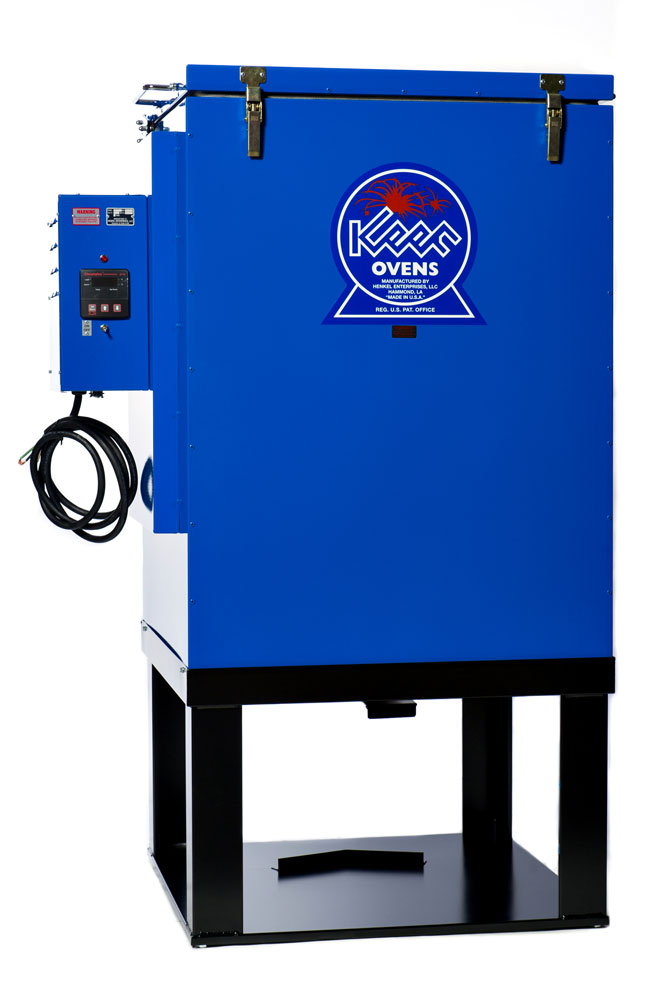
The high-capacity, high-performance KHTF-1000 flux oven manufactured by Keen is currently the largest subarc flux oven available to the welding industry. Wind tower fabrication engineers requested Keen to develop this 1000 lbs. capacity flux oven to improve their production lead times. Designed to dry moisture-contaminated subarc welding flux at high-temperatures and to also store flux at lower holding temperatures, the Keen KHTF-1000 flux oven was designed from the ground up to exceed requirements of the most uncompromising subarc welding operations. Packed with design elements that make other welding oven brands pale in comparison, the Keen KHTF-1000 flux oven features: resilient, powder-coated finish; 39/1000W Incoloy-sheated heating elements; innovative, energy-efficient design with rapid flux heating, minimized wattage and amp draw; heavy-duty flux hopper design with welded construction; well-built supporting stand with welded construction, support bars at top of hopper to rest flux bags for easy loading, heavy-duty lid supports and much more. Crammed with electrical and design safety features: digitally-adjustable, ON/OFF microprocessor-based controller with ±1 degree accuracy, manual reset high-limit fail-safe control and more.
Design And Build Your Own Custom Industrial And Welding Ovens
Each customer often has a specific process that requires the heat treating of parts, components or materials prior to assembly. Their parts are unique in size and shape, and a customized heat treatment oven specific to the part and application is often the only solution to streamline the process. Keen is your solution.
Key Differences Between Welding Flux Holding Ovens And Welding Flux Rebake Ovens
Keen ovens are specifically designed according to the temperature range of the process, and the amount of subarc flux to be stored. The standard holding ovens are designed to accommodate a maximum temperature of 550F and the rebake ovens are designed to reach 999F. The higher temperature ovens have larger wall thicknesses to accommodate more insulation and digital programmable temperature controllers. More information is available on the individual product pages. Please select a product from the chart above and you will be taken to the product page which has digital photos of each flux oven and technical specifications.
Frequently Asked Questions
Please read the following FAQ section for more information about KEEN flux ovens, as well as individual product overviews and specifications for the various subarc flux ovens we manufacture at KEEN.
What is subarc flux and what is submerged arc welding (SAW)?
Submerged arc welding (SAW) is a common welding process that is frequently used in the structural and vessel construction industries. The process requires a tubular or consumable solid electrode that is continuously fed into the work area using fully-automatic or semi-automatic methods. As the electrode is fed into the arc and melted, a layer of granular material provides a protective cover beneath which the welding occurs. Called flux, this fusible material consists of lime, silica, manganese oxide, calcium fluoride, and other compounds. The flux forms a hardened layer after it is heated and becomes molten. In this melted state the flux becomes conductive, thus enabling it to supply a constant current between the electrode and the welding work. The remainder of the flux is recovered and reused, unless it has become contaminated.
The granular flux used in SAW serves several functions. In addition to providing a protective cover over the weld, the flux shields and cleans the molten puddle. The flux also affects the chemical composition of the weld metal, the weld bead shape, and the mechanical properties of the weld. Another function of granular flux is to act as a barrier that contains and concentrates the heat into the weld area thus enabling deeper weld penetration.
Why do I need to store subarc flux in a heated oven?
In order to answer this question, it is pertinent to describe the four types of welding fluxes that are commonly available: fused, bonded, agglomerated and pre-mixed fluxes.
Fused — this type of flux is non-hygroscopic (does not absorb moisture from the air). Any surface moisture on the particles can be removed at a low temperature oven setting of 300°F.
Bonded — this type of flux is hygroscopic (absorbs moisture from the air) and is comprised of a combination of dry ingredients that are glued together with a liquid binder, then baked at a low oven temperature.
Agglomerated — this type of flux is hygroscopic and is manufactured the same way as bonded fluxes only a ceramic binder is used instead of a liquid binder.
Pre-Mixed — this type of flux is hygroscopic and is simply a combination of two or more bonded or agglomerated fluxes.
Just as stick welding electrodes readily pick up moisture from the surrounding atmosphere, the same applies to bonded welding fluxes that are comprised mostly of dry, powdered ingredients. As described above, the purpose of flux is to clean and shield the weld area from impurities. If moisture has contaminated the flux, hydrogen is released into the metal when heat is applied. When the weld cools, it can become brittle, crack and/or develop pinholes. Moisture-contaminated flux can also accelerate corrosion to certain metals like aluminum and must be kept dry throughout the welding process.
Welding flux holding ovens and rebake ovens are an indispensable addition to any subarc welding operation to help ensure quality welds. Our flux holding ovens and rebake ovens are suitable for almost any flux heating application that is required for today’s professionals.
What are the proper storage and rebaking guidelines for subarc flux?
For specific storage and rebake temperature guidelines, we recommend contacting the welding consumable manufacturer directly. It is also important to check with local welding codes and/or ask a welding inspector to provide some information. Welding standards change frequently, and each manufacturer often provides a different recommendation regarding welding consumable storage. Check the packaging and also manufacturer websites for information. Keen offers a wide range of products to handle almost any welding consumable storage requirement.
What is the difference between subarc flux holding/storage and subarc flux rebaking/reconditioning?
Generally, there are two involved with the proper maintenance of subarc welding flux: holding (also called storing) and rebaking (also called reconditioning).
The holding process refers to the long-term* heated storage of welding flux to maintain factory-fresh dryness. Storing the flux at elevated temperatures prevents atmospheric moisture contamination of the hygroscopic granules. There are various temperature requirements according to the type of flux and also that are also set forth by welding codes. For specific holding temperature guidelines, please contact the manufacturer of your welding consumable.
The rebaking process refers to the short-term*, high temperature heating of subarc flux that has been contaminated by atmospheric moisture. The rebaking process “reconditions” the welding flux, meaning it bakes out the moisture that has been absorbed thus restoring the flux so it is suitable for reuse. For specific rebake temperature guidelines, please contact the manufacturer of your consumable.
* - In relation to our products, we consider long-term to mean 24 hours/day 7 days/week.
How can I determine the amp draw for a particular model?
Use this formula: Watts / Voltage = Amps
Frequently Asked Questions
Please read the following FAQ section for more information about KEEN flux ovens, as well as individual product overviews and specifications for the various subarc flux ovens we manufacture at KEEN.
What is subarc flux and what is submerged arc welding (SAW)?
Submerged arc welding (SAW) is a common welding process that is frequently used in the structural and vessel construction industries. The process requires a tubular or consumable solid electrode that is continuously fed into the work area using fully-automatic or semi-automatic methods. As the electrode is fed into the arc and melted, a layer of granular material provides a protective cover beneath which the welding occurs. Called flux, this fusible material consists of lime, silica, manganese oxide, calcium fluoride, and other compounds. The flux forms a hardened layer after it is heated and becomes molten. In this melted state the flux becomes conductive, thus enabling it to supply a constant current between the electrode and the welding work. The remainder of the flux is recovered and reused, unless it has become contaminated.
The granular flux used in SAW serves several functions. In addition to providing a protective cover over the weld, the flux shields and cleans the molten puddle. The flux also affects the chemical composition of the weld metal, the weld bead shape, and the mechanical properties of the weld. Another function of granular flux is to act as a barrier that contains and concentrates the heat into the weld area thus enabling deeper weld penetration.
Why do I need to store subarc flux in a heated oven?
In order to answer this question, it is pertinent to describe the four types of welding fluxes that are commonly available: fused, bonded, agglomerated and pre-mixed fluxes.
Fused — this type of flux is non-hygroscopic (does not absorb moisture from the air). Any surface moisture on the particles can be removed at a low temperature oven setting of 300°F.
Bonded — this type of flux is hygroscopic (absorbs moisture from the air) and is comprised of a combination of dry ingredients that are glued together with a liquid binder, then baked at a low oven temperature.
Agglomerated — this type of flux is hygroscopic and is manufactured the same way as bonded fluxes only a ceramic binder is used instead of a liquid binder.
Pre-Mixed — this type of flux is hygroscopic and is simply a combination of two or more bonded or agglomerated fluxes.
Just as stick welding electrodes readily pick up moisture from the surrounding atmosphere, the same applies to bonded welding fluxes that are comprised mostly of dry, powdered ingredients. As described above, the purpose of flux is to clean and shield the weld area from impurities. If moisture has contaminated the flux, hydrogen is released into the metal when heat is applied. When the weld cools, it can become brittle, crack and/or develop pinholes. Moisture-contaminated flux can also accelerate corrosion to certain metals like aluminum and must be kept dry throughout the welding process.
Welding flux holding ovens and rebake ovens are an indispensable addition to any subarc welding operation to help ensure quality welds. Our flux holding ovens and rebake ovens are suitable for almost any flux heating application that is required for today’s professionals.
What are the proper storage and rebaking guidelines for subarc flux?
For specific storage and rebake temperature guidelines, we recommend contacting the welding consumable manufacturer directly. It is also important to check with local welding codes and/or ask a welding inspector to provide some information. Welding standards change frequently, and each manufacturer often provides a different recommendation regarding welding consumable storage. Check the packaging and also manufacturer websites for information. Keen offers a wide range of products to handle almost any welding consumable storage requirement.
What is the difference between subarc flux holding/storage and subarc flux rebaking/reconditioning?
Generally, there are two involved with the proper maintenance of subarc welding flux: holding (also called storing) and rebaking (also called reconditioning).
The holding process refers to the long-term* heated storage of welding flux to maintain factory-fresh dryness. Storing the flux at elevated temperatures prevents atmospheric moisture contamination of the hygroscopic granules. There are various temperature requirements according to the type of flux and also that are also set forth by welding codes. For specific holding temperature guidelines, please contact the manufacturer of your welding consumable.
The rebaking process refers to the short-term*, high temperature heating of subarc flux that has been contaminated by atmospheric moisture. The rebaking process “reconditions” the welding flux, meaning it bakes out the moisture that has been absorbed thus restoring the flux so it is suitable for reuse. For specific rebake temperature guidelines, please contact the manufacturer of your consumable.
* - In relation to our products, we consider long-term to mean 24 hours/day 7 days/week.
What are the key differences between welding flux holding ovens and welding flux rebake ovens?
Keen ovens are specifically designed according to the temperature range of the process, and the amount of subarc flux to be stored. The standard holding ovens are designed to accommodate a maximum temperature of 550F and the rebake ovens are designed to reach 999F. The higher temperature ovens have larger wall thicknesses to accommodate more insulation and digital programmable temperature controllers. More information is available on the individual product pages. Please select a product from the chart above and you will be taken to the product page which has digital photos of each flux oven and technical specifications.
How can I determine the amp draw for a particular model?
Use this formula: Watts / Voltage = Amps
.jpg)
contact our experts
Our staff is available to answer any questions, or locate a Keen distributor in your area.
Give us a call at 1-888-512-2870 or send us a message and our team will be in touch shortly!
*denotes a required field.